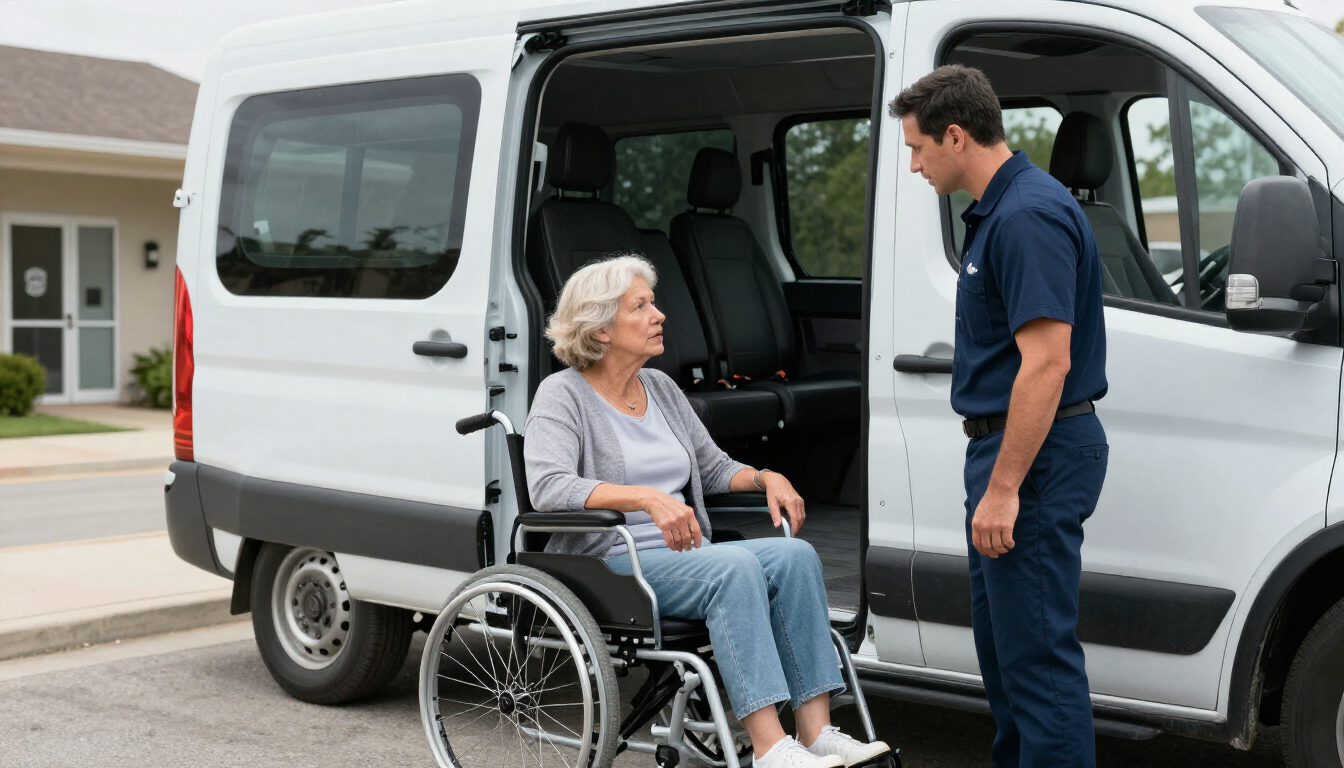
If you’ve ever tried to get a parent with mobility challenges to a doctor’s appointment using a standard rideshare app, you already know the drill. The car pulls up at the curb. The driver stays in the front seat. You’re left trying to fold a walker, navigate a tricky driveway incline, and help your parent safely into the backseat—all while the clock is ticking.
The Reality of Curb-to-Curb
Curb-to-curb means exactly what it sounds like. The driver’s responsibility begins and ends at the curb. They will pick you up at the street and drop you off at the street. If you need help getting from the front door of your house down the steps to the car, or from the car through the double doors of a medical facility, you are entirely on your own.
Rideshares (like Uber or Lyft), standard taxis, and even some basic public transit options operate strictly on a curb-to-curb basis.
Who is this for? Curb-to-curb is perfectly fine for someone who is completely independent, walks easily without assistance, and has no cognitive impairments (like dementia or severe anxiety).
Why Door-to-Door (and Through-the-Door) Changes Everything
True assisted transportation is built around "door-to-door" or "through-the-door" service. This is where professional NEMT services, like those utilizing PASS-certified drivers, step in.
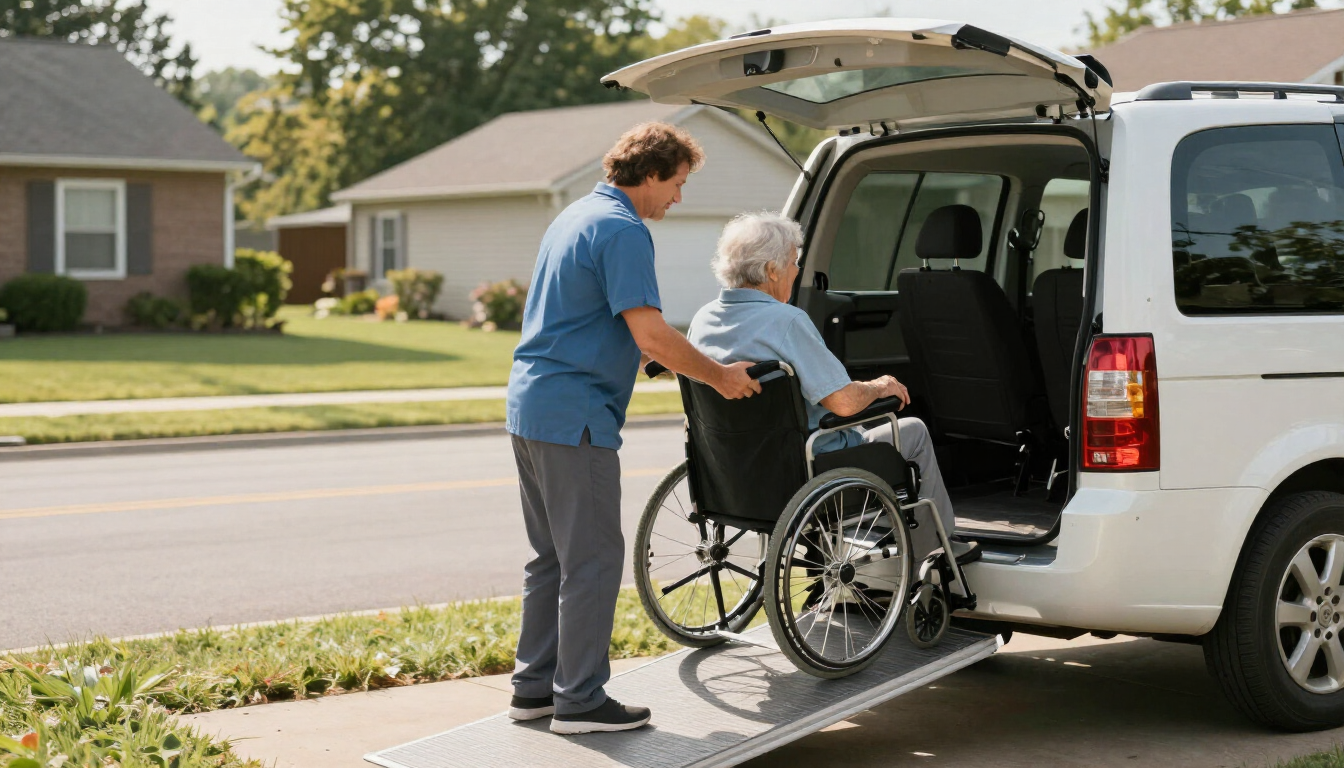
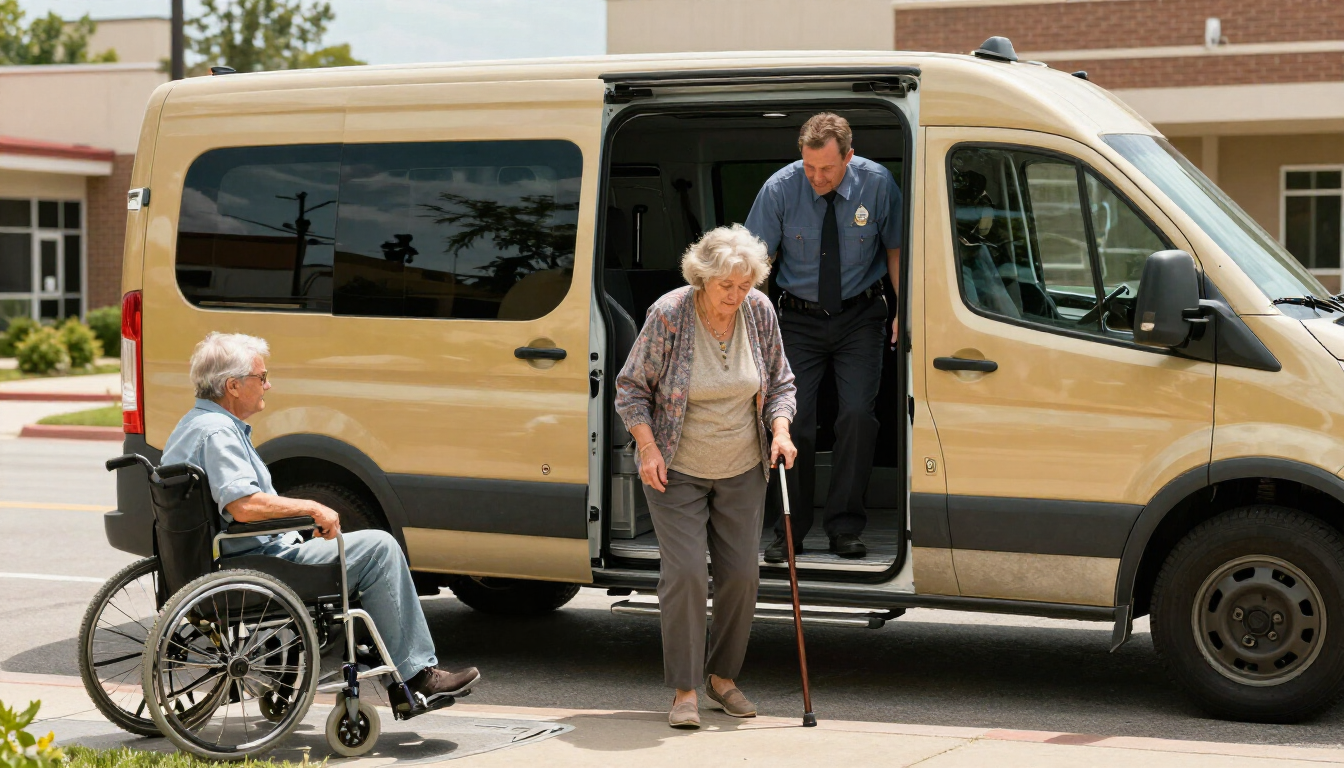
With door-to-door service, the driver doesn’t just sit in the vehicle. They get out, come to your front door, and physically assist the passenger from the threshold of the home into the vehicle. At the destination, the driver helps them out of the vehicle and escorts them through the front doors of the clinic or hospital.
Why does this matter in Wichita?
- Weather
- Navigating a wheelchair or walker across an icy driveway in January, or across a sun-baked parking lot in July, isn’t something an elderly person should do alone. A professional driver ensures they are steady and safe.
- Facility Navigation
- Clinics at places like Wesley or Via Christi can be massive and confusing. A door-to-door driver doesn’t just drop someone off at a curb; they make sure the passenger gets safely inside the lobby.
- Safety & Liability
- PASS (Passenger Assistance Safety and Sensitivity) certified drivers are trained in how to safely transfer a person, handle folding walkers, and manage wheelchair securements. A standard rideshare driver is not.
How to Choose
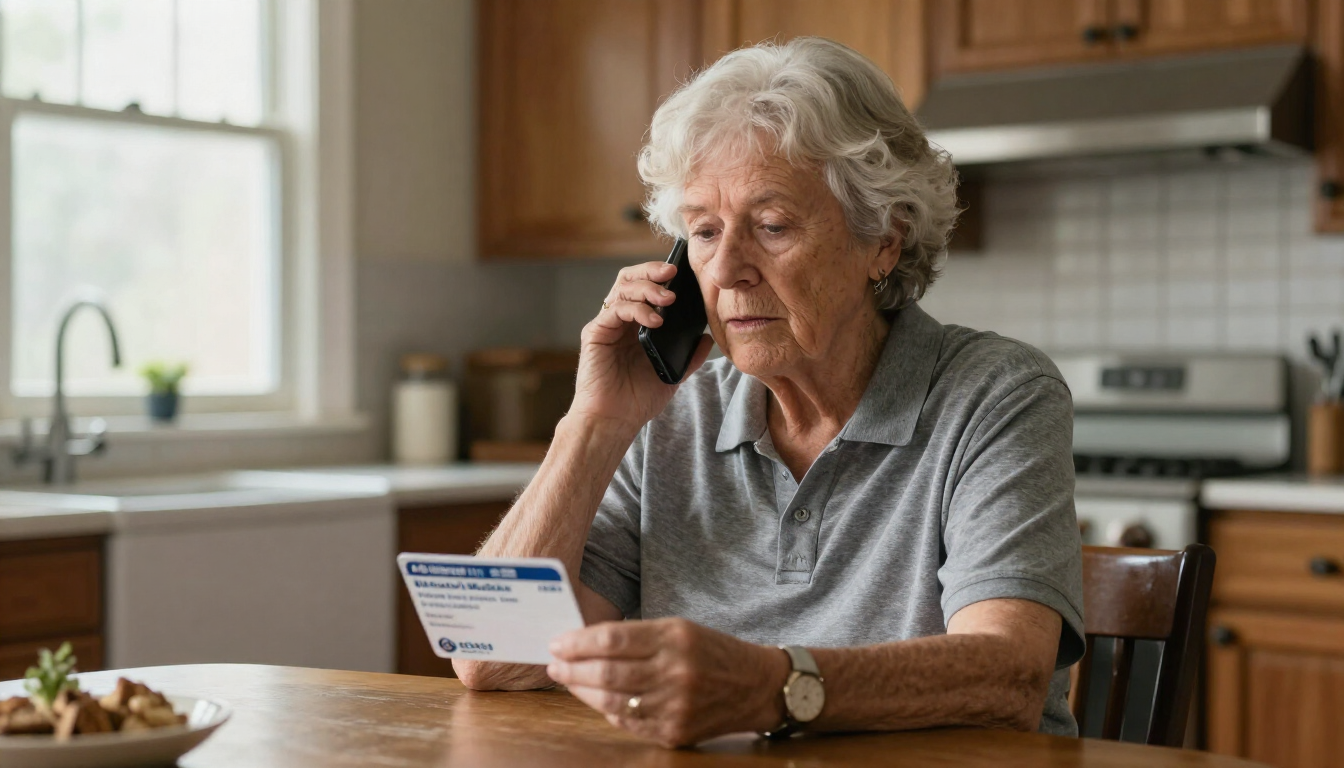
When booking a ride, always ask specifically: "Do your drivers provide door-to-door assistance?" If the answer is no, and your loved one uses a mobility device, gets easily confused, or is recovering from surgery, keep looking.
Choosing the right level of service isn’t just about convenience; it’s about dignity, safety, and giving caregivers peace of mind when they can’t be there themselves.
Frequently Asked Questions
What if my parent needs help getting from their bedroom to the front door?
That requires "door-through-door" service (or "room-to-room"). Not all NEMT providers offer this due to liability. Always clarify exactly how much inside-the-home help is needed when booking.
Will a door-to-door driver wait during the appointment?
Usually, no. Standard NEMT involves a drop-off and a scheduled return trip. If you need someone to stay with the patient, you need to book a companion or ask about "wait-and-return" rates.
Need door-through-door assistance in Wichita?
Our PASS-certified drivers escort passengers from inside the home, through the vehicle, and all the way to check-in — never a curb-to-curb drop-off.
Found this helpful? Share it with family and friends.